Make a travel poster from a photo that means something to you
A place does not need to be famous to be worth a poster. The sea on an ordinary afternoon, a familiar street, or a building you stopped to notice can be a better subject than a landmark chosen only because everyone recognizes it.
From the Everyday Rare team · September 17, 2026
Find the shape of the place
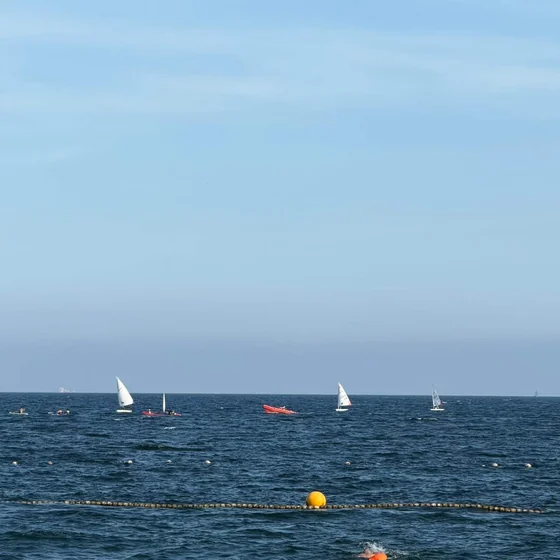
Look for a horizon, a curve, a roofline, or a repeating pattern. These give a composition direction. The sky, water, or a quieter wall can offer room for typography, while a crowded photograph may call for a different approach. Avoid forcing a title over the detail that makes the place interesting. Start with a photograph that contains both the subject and some surrounding context. Cropping too tightly before you begin can remove the lines, scale, or atmosphere that help the design make sense.
Choose what you want to remember
A useful idea can name the feeling and one detail: “Keep the calm blue of the sea and the small sailboats.” Or: “Preserve the old shopfront lettering and the warm evening light.” These instructions are more specific than asking for a dramatic, cinematic, premium result all at once. If a building, sign, or landmark must remain accurate, say so and check it carefully afterward. AI artwork can alter architectural features and written signs. Keep the original photograph when factual detail matters.
Use a place name with intention
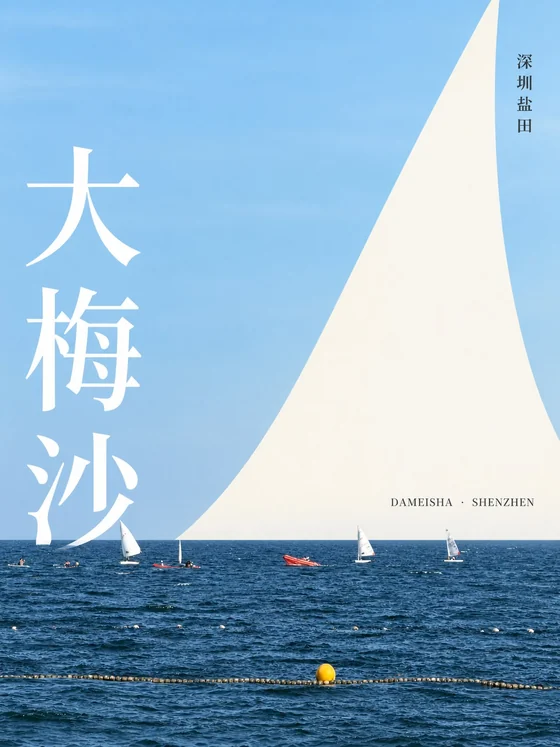
A location name can serve as a quiet caption or become part of the composition. Use the spelling you want to see, with the language made explicit if needed. A date or a short personal phrase may be more meaningful than a generic travel slogan. The Dameisha example uses the open sky and a sail-like form to organize the page. The Chinese title and English location line give it two reading distances. This is a specific design for that photograph, not a promise that another seascape will produce the same layout.
Let several photos tell one place’s story
For a richer view, select a few related photographs of the same place: an overall view, a close detail, and something that shows everyday life there. Explain that they belong to one location. Combining unrelated landmarks can create a fictional geography, so be clear when a collage or an imagined scene is what you want. Everyday Rare accepts up to eight inputs for one creation. More is not always better. Two or three photos with distinct roles can provide a clearer story than eight nearly identical views.
Keep a digital artwork, and check before printing
Save the finished result to Photos so you retain your own copy. The app creates digital artwork; it does not sell prints or frames. If you choose to print elsewhere, inspect the downloaded file dimensions, text, and small details at the intended size. A useful starting idea: “Make a travel poster from this photo. Keep the sea and sailboats. Use the place name Dameisha, Shenzhen. Leave the atmosphere calm.” Change the place name and priorities to fit your own photograph.