How to combine several photos into one artwork
Several photos can hold one story: a sequence of expressions, different views of a place, or people photographed at separate moments. The useful question is not how many photos you can add, but what each one contributes.
From the Everyday Rare team · September 17, 2026
Start with one connection
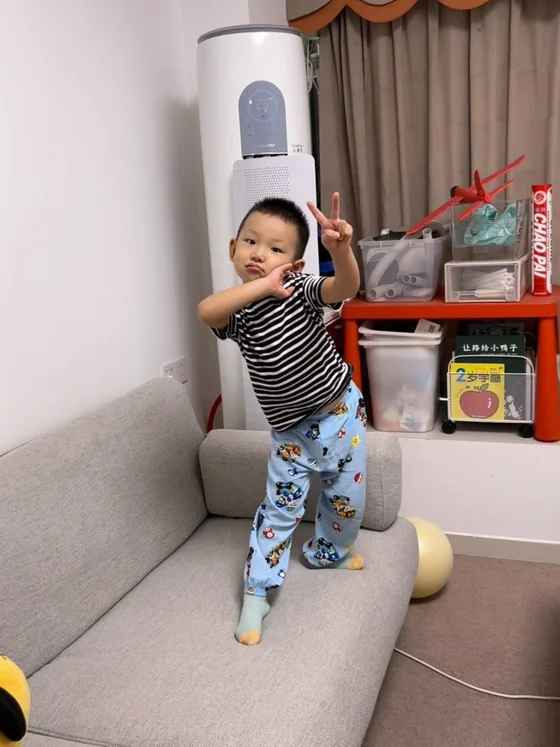
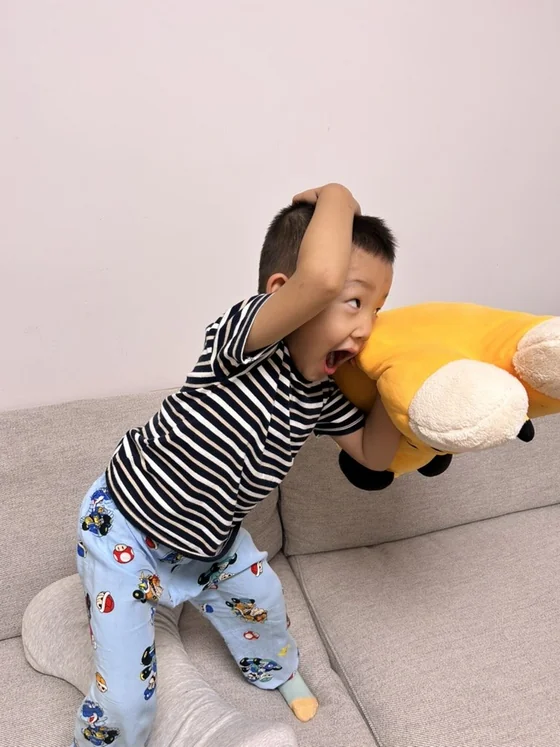
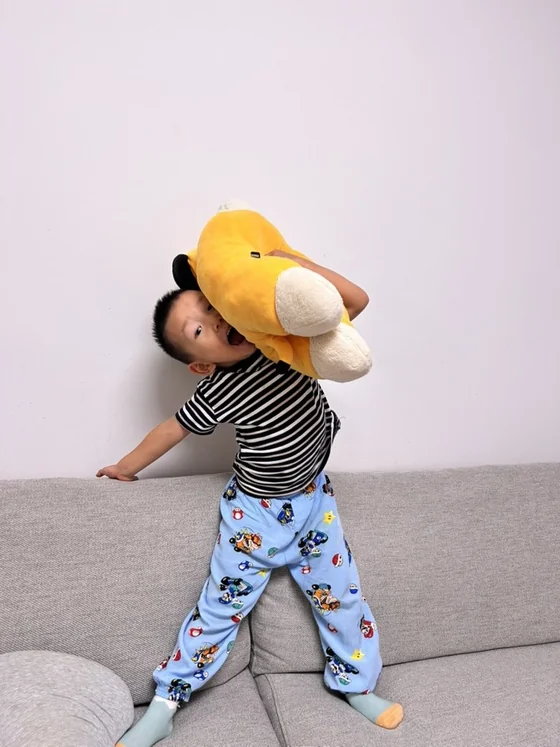
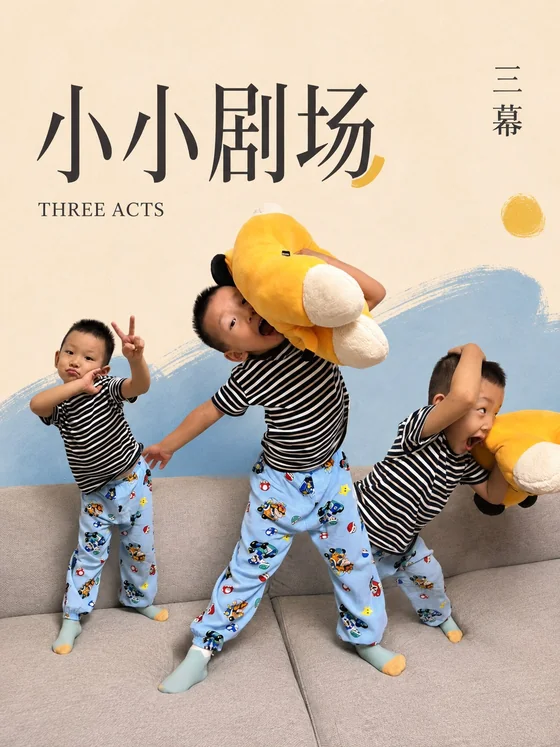
Choose photos connected by a person, a place, an event, or a short sequence. A child’s three expressions from the same afternoon already suggest a story. Three unrelated portraits need more explanation about how you want them to relate. In the Three Little Acts example, three source photos become a playful sequence. Each pose contributes something different. The result is one composition, not simply three rectangular images placed in a grid.
Give every source a role
Try describing your selection in one sentence: “Use all three expressions as a sequence, from quiet to playful.” For a place: “The first photo shows the building, the second shows its entrance, and the third supplies the street atmosphere.” When every person must appear, say that directly. After generation, check that all intended sources are represented. Multi-photo generation is interpretive; an input can be simplified, changed, or given less emphasis than you expected.
Choose distinct views, and keep useful quality
Use original photos where possible. Avoid several near-duplicates unless the small differences are the story. Look for readable faces and gestures, compatible viewpoints, and enough surrounding context to understand what is happening. Very different lighting, scale, or camera angles can be harder to bring together naturally. That does not rule out using them, but a sequence or collage may be a more honest composition than pretending they were all photographed in one instant.
A multi-photo artwork is not always a collage
A collage keeps separate photographs visibly separate. A sequence arranges moments so you can read them in order. An integrated scene combines elements into one visual space. None is automatically better; the right direction depends on your inputs and intent. If you have a preference, include it in your idea. For example: “Use these three photos as a sequence. Keep each expression distinct; do not turn them into one new pose.” Or: “Build one scene from these views, while keeping the building recognizable.”
Review the whole story
Compare the result with every original. Count the people, inspect faces and hands, read the lettering, and check whether the relationships still make sense. A beautiful result can still miss the point of one source photo. Everyday Rare accepts one to eight photos and uses one credit for the resulting creation, not one credit per input. A failed creation refunds its credit. A successful result is still a creative interpretation; the examples show possibilities rather than guaranteed layouts.